The Importance of Staying OSHA Compliant
OSHA’s biggest 2025 enforcement focus around “dust containment” has been respirable crystalline silica; especially in countertop fabrication, concrete cutting, demolition, grinding, and masonry work. The most common violations involve inadequate dust suppression, missing HEPA controls, poor housekeeping, and lack of exposure monitoring.
Most Frequently Cited OSHA Dust Containment Violations in 2025
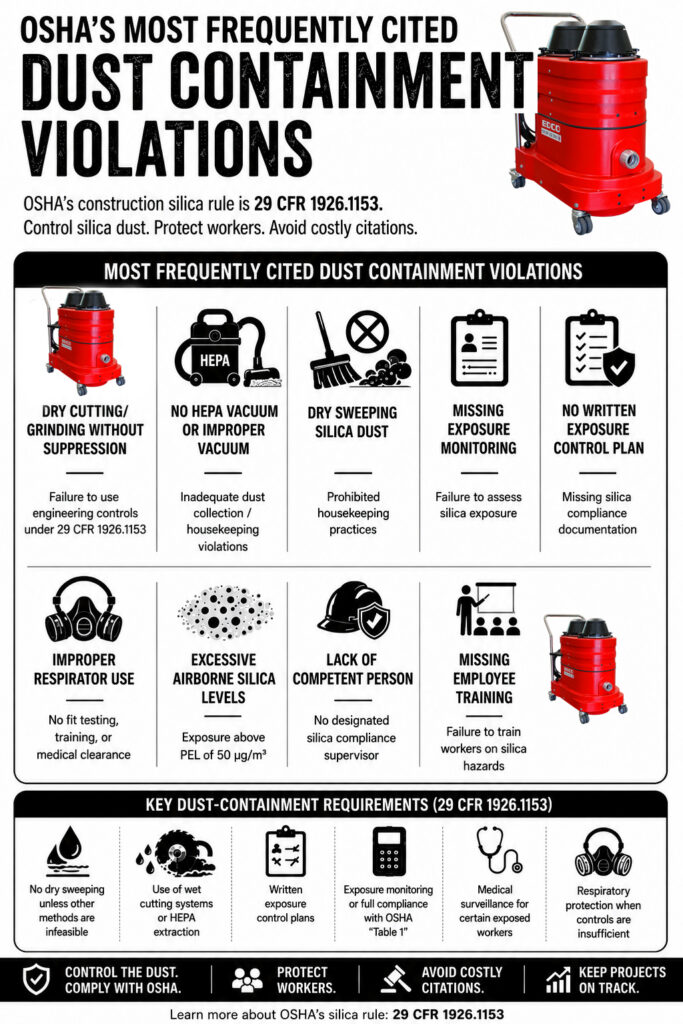
Key dust-containment related requirements include:
- No dry sweeping unless other methods are infeasible
- Use of wet cutting systems or HEPA extraction
- Written exposure control plans
- Exposure monitoring or full compliance with OSHA “Table 1”
- Medical surveillance for certain exposed workers
- Respiratory protection when controls are insufficient
Dust Containment Methods OSHA Expects
OSHA inspectors are specifically looking for:
- Wet cutting systems
- HEPA-filtered vacuums
- Dust shrouds on grinders/saws
- Negative air or localized ventilation
- Proper debris cleanup methods
- Sealed containment areas indoors
- Exposure monitoring records
- Silica training documentation
Common failure points in inspections include:
- Vacuums without HEPA filtration
- Poor maintenance of extraction systems
- Dry sweeping after concrete cutting
- Employees removing respirators inside dusty zones
- Recycled water systems concentrating silica dust
OSHA’s National Emphasis Program is heavily targeting:
- Engineered stone fabrication
- Countertop shops
- Concrete contractors
- Masonry
- Demolition
- Asphalt/concrete milling
- Construction renovation crews
OSHA reported hundreds of targeted inspections tied to silica exposure, with violations issued in a large majority of inspections.
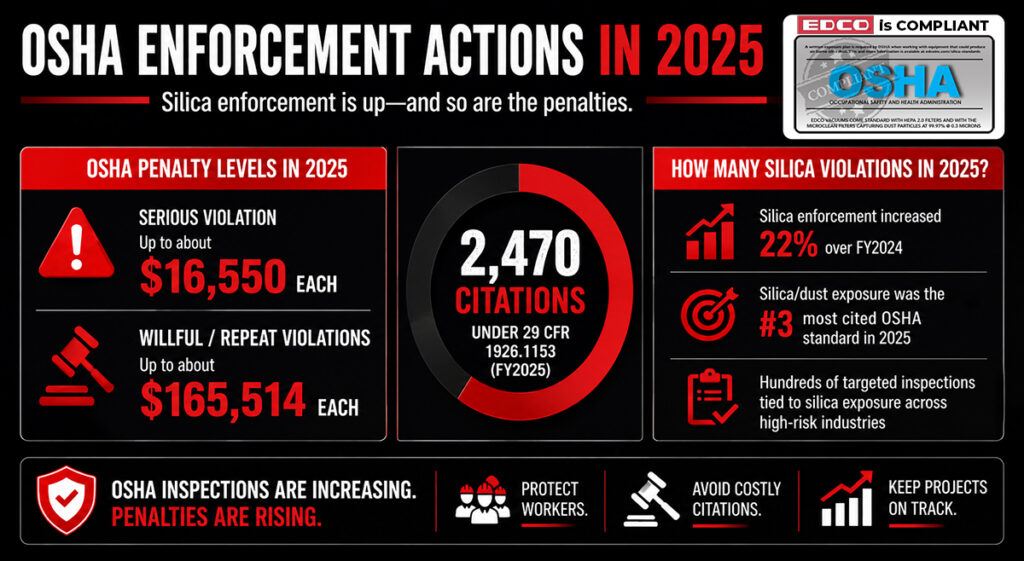
How many violations were issued in 2025? OSHA does not publish a single nationwide number specifically labeled “dust containment violations” for 2025, but the closest tracked category is respirable crystalline silica enforcement under standard 1926.1153. For FY2025, OSHA issued approximately 2,470 citations under the respirable crystalline silica construction standard (29 CFR 1926.1153).
That made silica/dust exposure:
- #3 most cited OSHA standard in 2025
- One of OSHA’s fastest-growing enforcement areas.
Additional enforcement trends reported for 2025:
- Silica citations in construction reportedly increased about 22% over FY2024.
- Some regional programs (like New York construction) reported increases of around 34% year-over-year.
These citations commonly involved:
- no wet cutting systems,
- no HEPA dust extraction,
- dry sweeping,
- missing exposure monitoring,
- missing written silica plans,
- inadequate respirator programs.
Staying OSHA-Compliant with Dust Control
With OSHA silica enforcement increasing in 2025, contractors and fabrication shops need reliable dust-control systems that meet today’s compliance standards. Using properly maintained HEPA-filtered vacuum systems, along with dust shrouds, wet cutting methods, and proper housekeeping practices, can help reduce airborne silica exposure and support OSHA compliance under 29 CFR 1926.1153. EDCO vacuum systems are designed specifically for demanding concrete and surface preparation applications, helping crews capture dust directly at the source during grinding, cutting, scarifying, and polishing operations. Features like HEPA filtration, durable construction, and high airflow performance can help mminimize airborne dust on the jobsite. When paired with EDCO equipment and proper work practices, these systems can help contractors create cleaner work environments, reduce cleanup time, improve visibility, and support safer, OSHA-compliant operations.